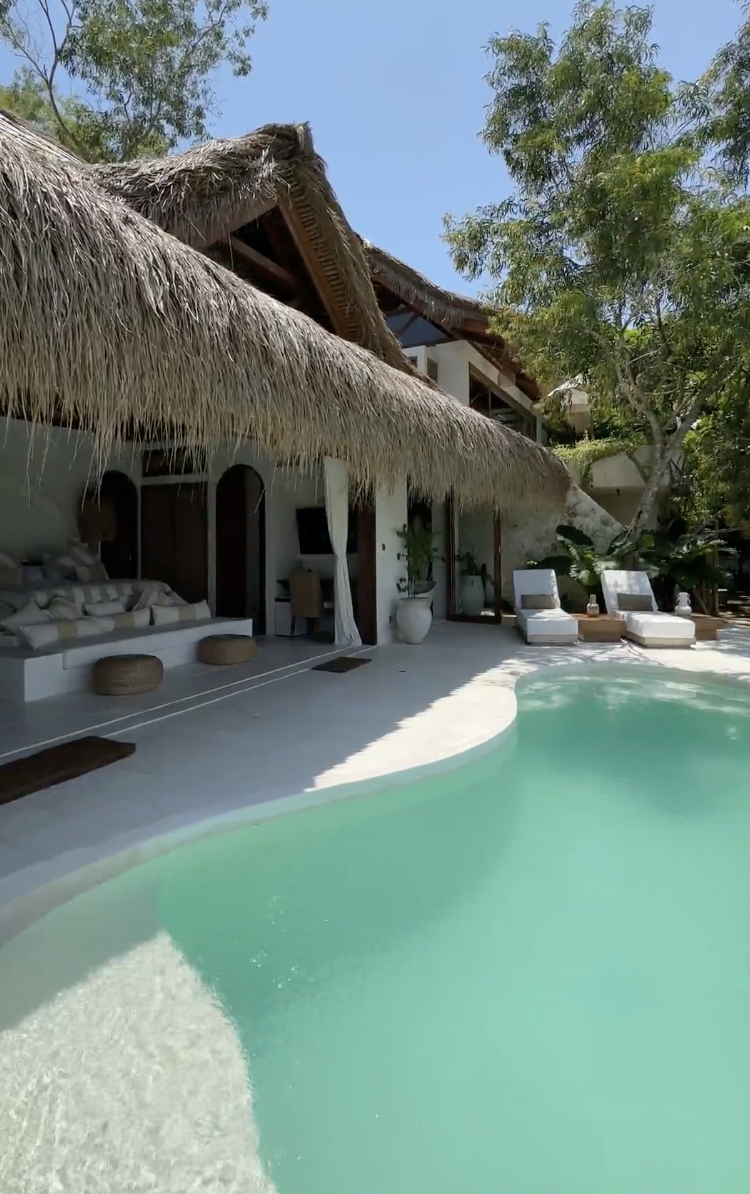
Munay Wasi Villas in Uluwatu
Seven nights across Uluwatu and Gili Meno — a birthday trip that reminded us why the most memorable spaces are often the quietest.
Travel has always been one of my biggest sources of inspiration — not in the obvious, postcard sense, but in the way a space is composed. How it holds you. How light moves through the day. The temperature of stone under bare feet, the softness of linen, the pause created by a threshold.
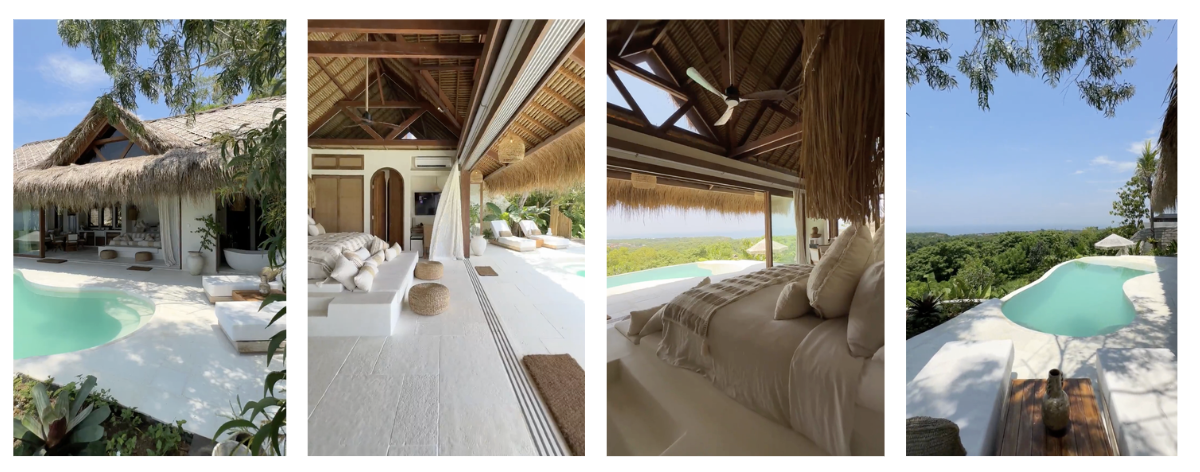
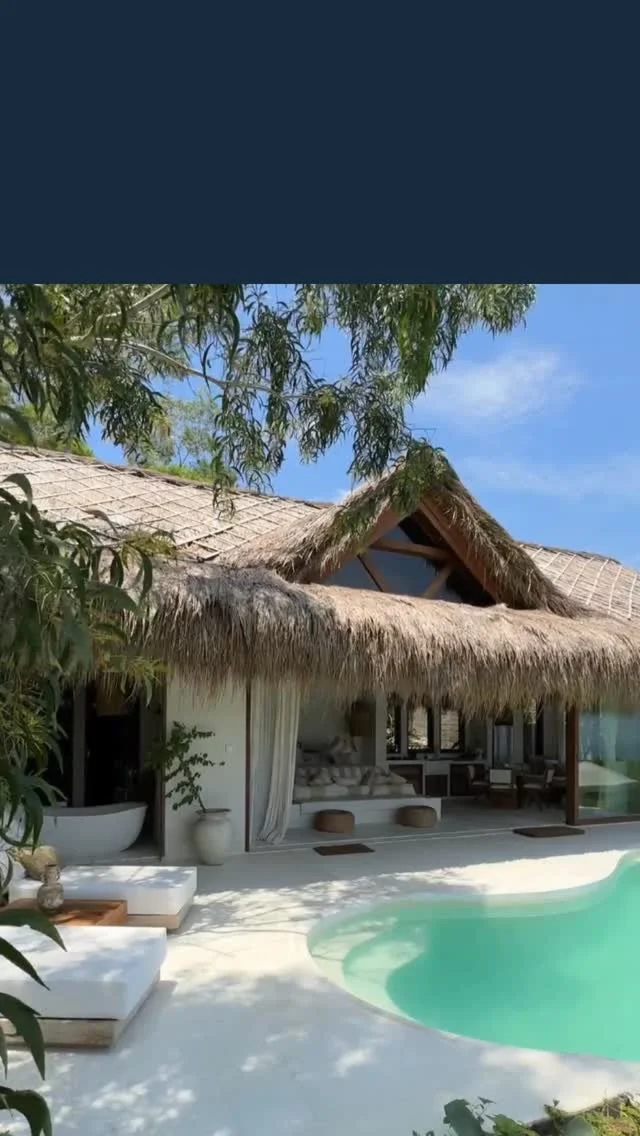
Munay Wasi Villas in Uluwatu
This trip was seven nights in Bali for my birthday — my third time back, but my first time properly slowing down in Uluwatu and pairing it with the gentler pace of Gili Meno.
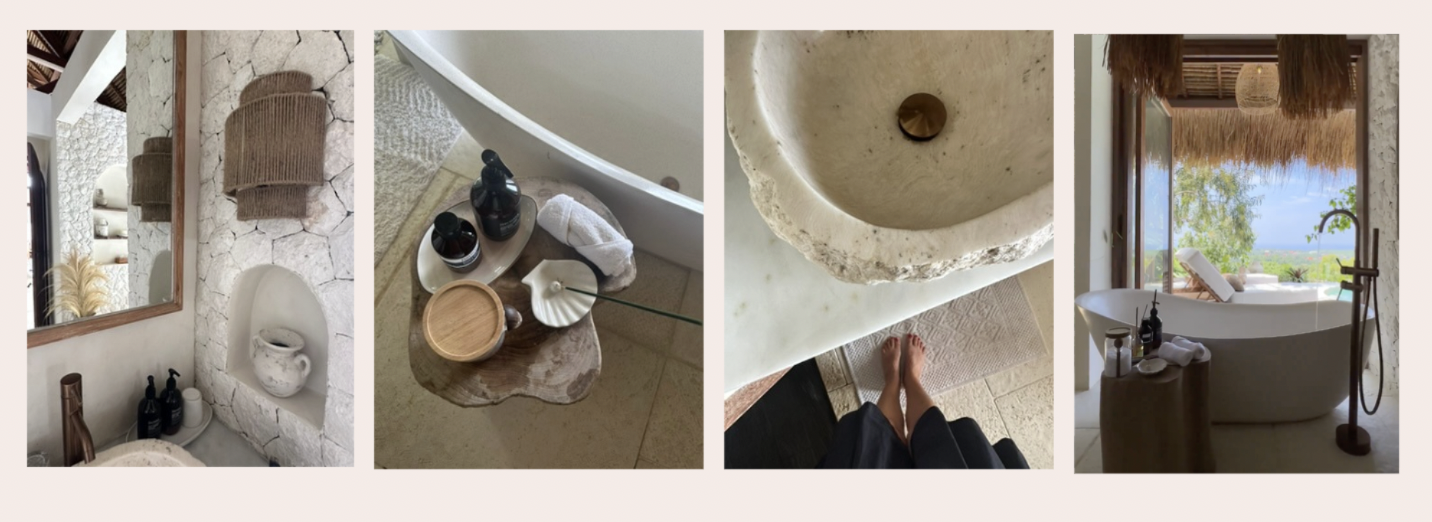
Bathroom details at Munay Wasi Villas in Uluwatu
We began in Uluwatu, spending three nights at Munay Wasi Villas (Villa Batu Karu). Set high in the hills and wrapped in dense greenery, the villa is oriented to the horizon — layered views to the ocean, and sunsets that read like a daily ritual. Mornings arrived with birdsong and damp, frangipani-scented air; by late afternoon the light turned honeyed and the canopy became a moving backdrop beyond the glass.
What stays with me is the restraint. Lime-washed walls, warm timber, softened linen, and a thatched roof that filters the sun into something calmer. Large panes of glass pull the landscape into every room, so the boundaries feel intentionally blurred — inside becomes a place to rest, not to retreat. Between swims, the villa’s sauna and cold plunge created their own rhythm: heat, salt air, then the shock of cold water, followed by stillness and a slow return to the view. Balinese accommodation is hard to beat anywhere in the world.
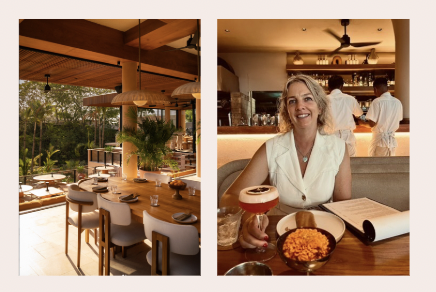
Teja Restaurant Ulluwatu
Uluwatu still feels relatively small — not overly built up — with an easy rhythm of cafés, thoughtful restaurants, and that unmistakable surf-town energy (plus its fair share of digital nomads). We loved being able to walk into the village for breakfast; Alchemy became a repeat stop, especially for the smoothie bowls. Dinners were split between Teja and Avali for Greek.
In between, we did what Uluwatu does best: cliffside drives with flashes of turquoise below, salty swims, and long pauses where the coastline opens up. A quick visit near the Uluwatu temple brought the local wildlife into the frame — monkeys watching from stone walls and tree branches, bold and curious in the way only they can be. It was a reminder that in Bali, nature isn’t background; it’s present, insistent, and woven through everything.
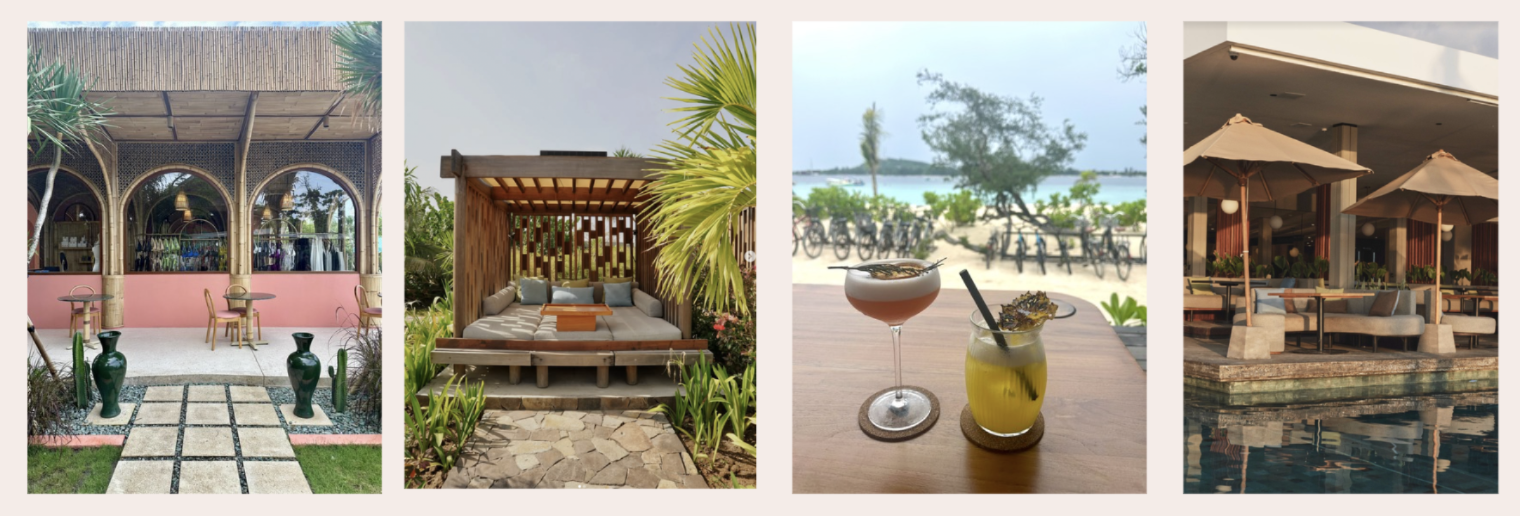
Bask Resort
From there, we moved to Gili Meno for four nights at Meno House — a small, adults-only resort with just seven rooms — a shift that felt immediate, like turning the volume down.
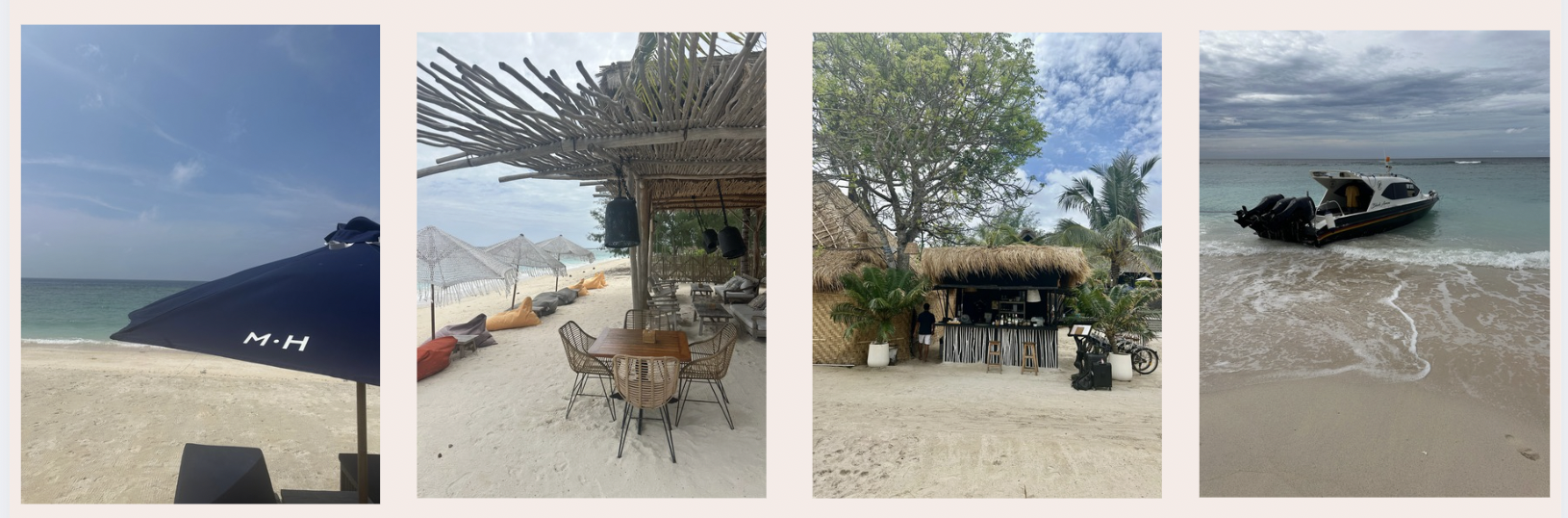
Meno House - Gilli Meno
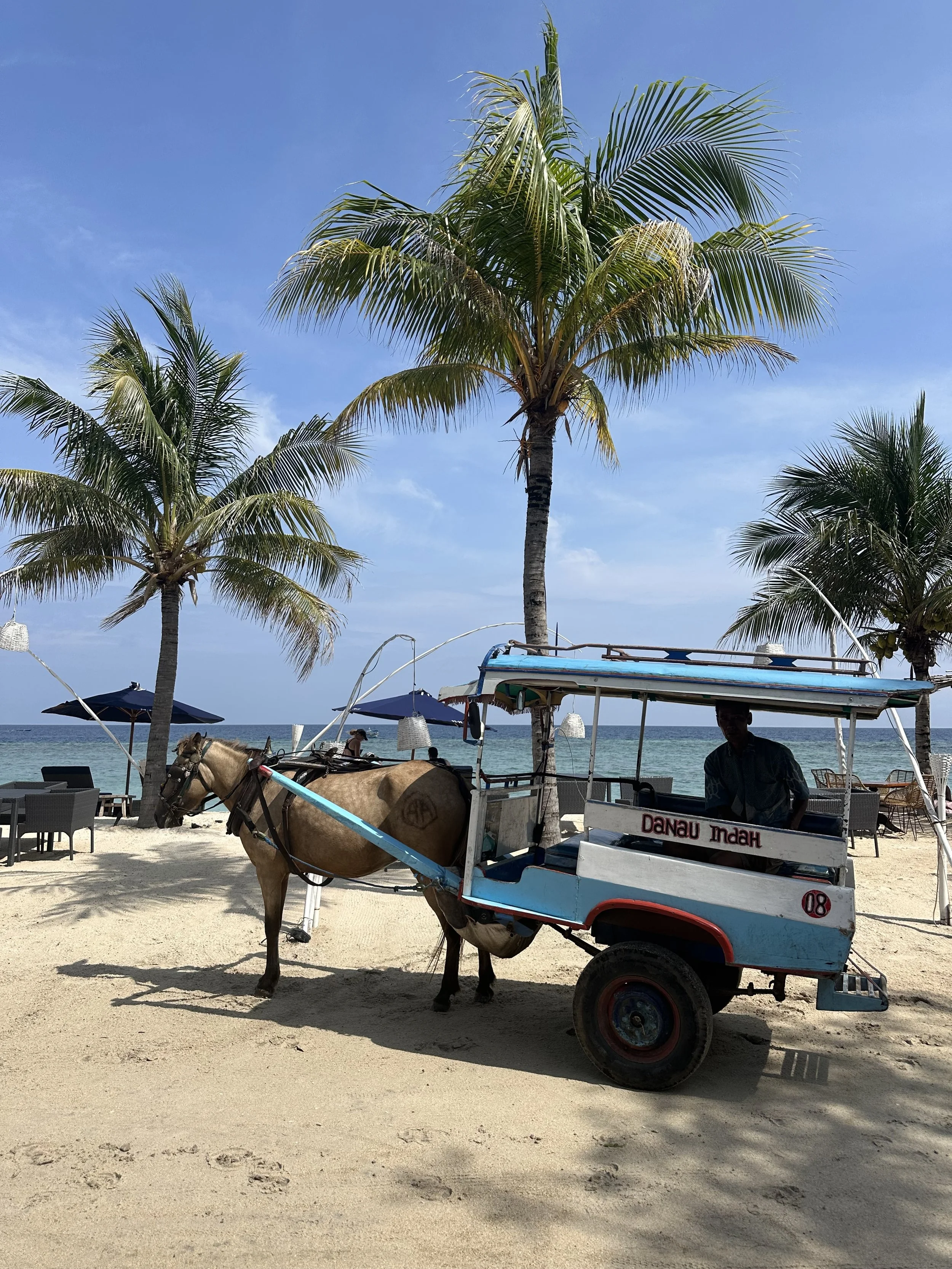
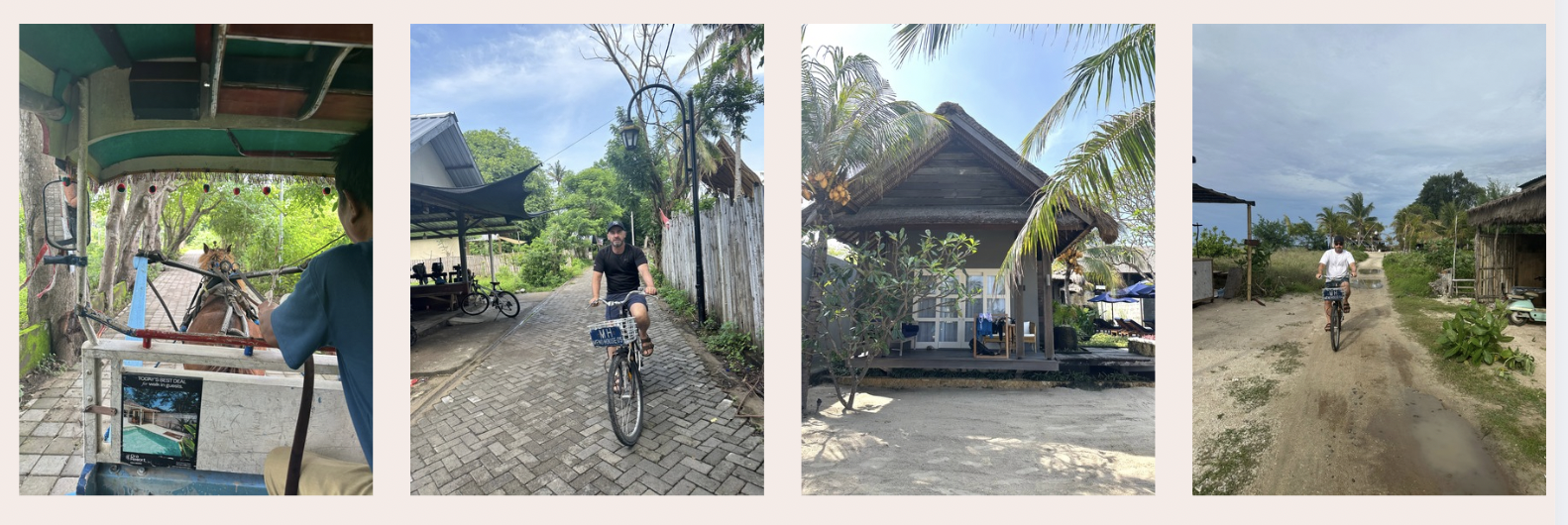
Arriving by private boat transfer from Lombok and stepping straight onto the sand, you feel the pace change. There are no cars — only bikes and horse-and-cart — and you can cycle the full loop of the island in about an hour. It’s more rustic than Uluwatu, but that simplicity is the point. Evenings became long, salt-air dinners and a well-made cocktail at Bask, or its sister restaurant Pomona for relaxed Mexican.
Days were spent in the water — the kind of swimming that resets your whole nervous system. We snorkelled over coral gardens that felt almost untouched, following shifting schools of fish through clear, shallow light, and swimming with turtles close enough to hear the soft rush of water as they surfaced. It’s one of the best snorkelling spots we’ve experienced, not because it’s dramatic, but because it feels so effortless.
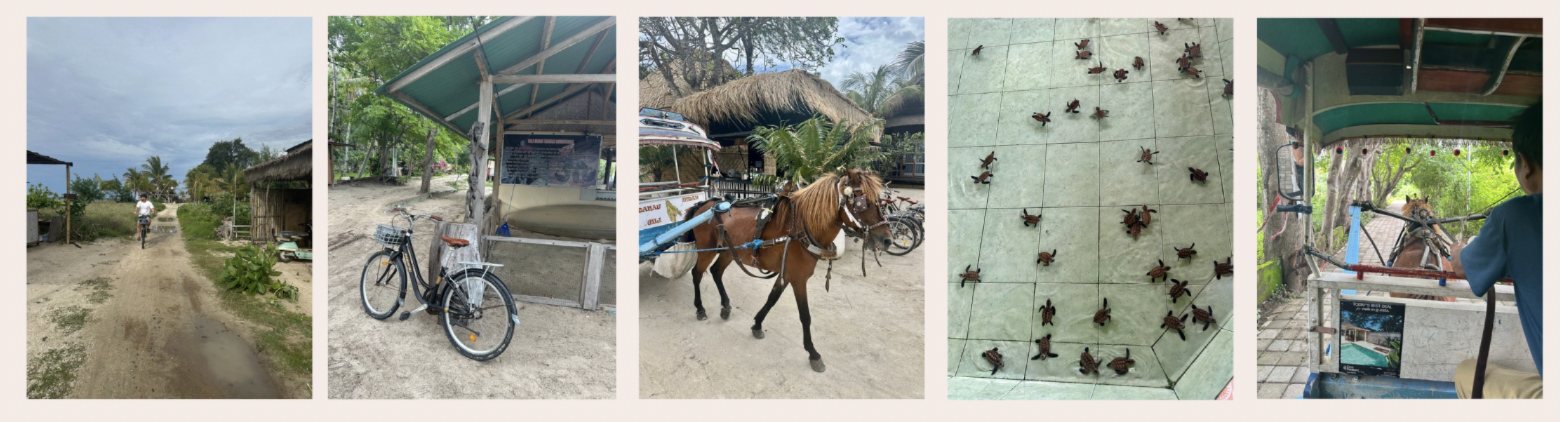
Gilli Meno Island - Including Turtle sanctury
Leaving by horse and cart felt fitting — quiet, a little nostalgic, and perfectly aligned with the pace of the island.
More than anything, the trip reinforced something we return to often at Hello Saturday: good design isn’t about adding more. It’s about editing with intention — choosing materials that age well, letting light do the work, and creating rooms that feel calm, grounded, and genuinely easy to live in. Bali does this instinctively: it prioritises shade, texture, breeze, water, and a constant relationship to the outdoors. It’s a useful reminder that the most restorative spaces are usually the ones that make room for nature to lead.